

Modern Slavery and Supply Chain Transparency Statement
Modern Slavery and Supply Chain Transparency Statement (2025)
Newell Brands is a global consumer products company with an iconic portfolio of more than 50 brands. Our values—Leadership, Integrity, Ownership, Passion for Winning, and Teamwork—reflect our commitment to ethical business practices and to full compliance with the laws that prohibit modern slavery, forced labor, child labor, and human trafficking throughout our global supply chain.
This statement is made in accordance with the California Transparency in Supply Chains Act, the UK Modern Slavery Act,1 the Australian Modern Slavery Act,2 and the Canadian Fighting Against Forced Labour and Child Labour in Supply Chains Act.3 It covers Newell Brands and its subsidiaries during the calendar year 2025 and outlines our commitments for 2026 and beyond.
To learn more about our operating segments, review our 2025 Annual Report on Form 10-K.
Newell Brands4 recognizes that our responsibility extends far beyond the products we create. Our iconic brands—from Sharpie to Graco, Oster to Yankee Candle, Rubbermaid to Coleman—reach millions of consumers worldwide. With that global reach comes an unwavering commitment to protecting the human rights of every worker throughout our value chain.
Modern slavery including, forced labor, child labor, human trafficking, debt bondage, and deceptive recruiting for labor or services, has no place in our business or our supply chain. Our core values drive a comprehensive approach to preventing these abuses and ensuring that every product bearing a Newell brand is manufactured with dignity and respect for human rights.
Newell at a Glance*
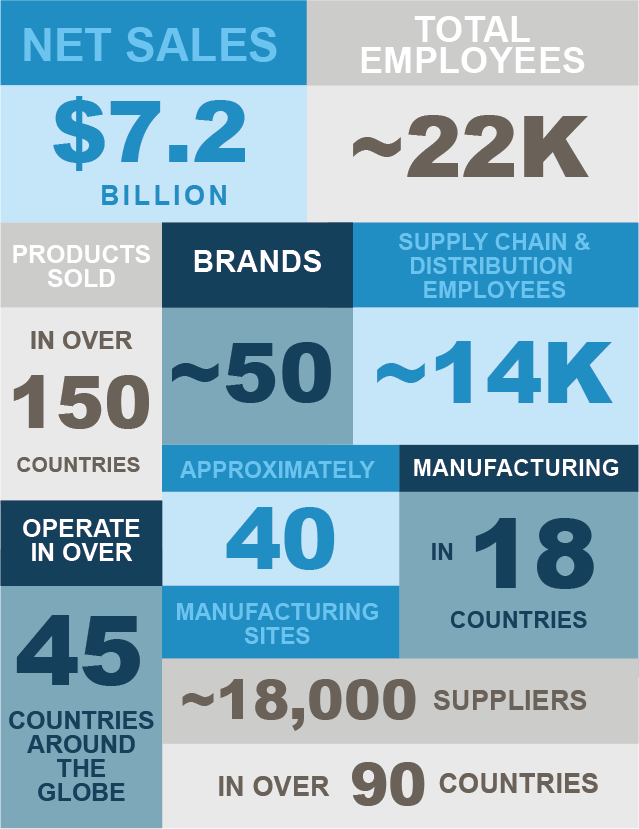
*Data represents a 12-month period ending December 31, 2025.
This scale carries significant responsibility. We take seriously the impact our business has on workers throughout our supply chain, and we maintain that under no circumstances is it acceptable for anyone to be subjected to any form of modern slavery. We work continuously to create transparency across our supply chain to ensure that our customers and consumers receive ethically produced and responsibly sourced products.
The breadth of our product portfolio and global footprint mean that Newell operates a complex, multi-tiered supply chain. We source finished goods, raw materials, components, and services from over 18,000 suppliers spanning more than 90 countries. Our suppliers range from large multinational corporations to small and medium-sized enterprises, and we tailor our procurement and oversight approach accordingly.
Newell’s global supplier network undergoes ongoing reviews conducted by our Responsible Sourcing Team as part of a global monitoring plan encompassing social compliance and supply chain security assessments conducted through our Responsible Sourcing Program. This program is designed to create transparency across our supply chain and to align our actions and those of our suppliers with our goal of producing and sourcing products in an ethical and responsible manner.
Through Newell’s policies, such as our Code of Conduct, Vendor Code of Conduct and Responsible Sourcing Manual, we demonstrate our dedication to upholding our values and supporting our rigorous efforts to prevent modern slavery throughout our supply chain.
Code of Conduct
Newell’s Code of Conduct is reviewed annually and serves as a guidepost for our employees across the business to conduct themselves ethically. The Code is published in twelve languages and provides an overview of our high ethical standards, including those relating to human rights and workers’ rights. It specifically prohibits “the use of child labor, forced labor, or physical punishment” in every aspect of our business and outlines our commitment to:
- Follow applicable wage and hour laws, including minimum wage, overtime and maximum hour laws
- Respect our employees’ rights to lawful freedom of association and recognize their right to collective bargaining
- Support equal opportunity for all employees
Upon joining Newell, all employees receive a copy of the Code of Conduct and certify their agreement to comply with its requirements. In addition, for the third year in a row, we proudly reported a 100 percent completion rate for employees assigned to complete mandatory Code of Conduct training.
Vendor Code of Conduct
Newell partners with suppliers who adhere to the highest standards of ethical business conduct. Our Vendor Code of Conduct, available in multiple languages, requires suppliers to demonstrate that they provide safe working conditions, treat workers with dignity and respect, act ethically, and comply with all applicable human rights and labor laws. Consistent with our commitment to preventing modern slavery, the Vendor Code of Conduct requires vendors to “maintain a work environment that is free from any forced labor, prison labor, or human trafficking,” including child labor or any form of involuntary employment. We require our direct and sourced finished goods suppliers to attest to our Vendor Code of Conduct on an annual basis or when updates are made to the Code. Serious violations may result in termination of the business relationship.
Leadership Engagement
The leadership team at Newell is committed to human rights and responsible sourcing practices, and we expect every supplier to take these matters seriously. Any violations involving allegations of bribery, child labor, forced or prison labor, cross-border smuggling, or falsifying documents are escalated to a committee of Newell Brands executives that includes our SVP, Global Procurement, Chief Ethics and Compliance Officer, Chief Legal and Administrative Officer, and other segment business leadership, as appropriate.
These leaders work together with subject matter experts, including Human Resources, to resolve issues expeditiously and effectively in alignment with our values. Consequences may include reduction or loss of business for the supplier, or termination of the business relationship. Suppliers are expected to maintain effective systems to manage social compliance actively within their operations and to ensure that all violations are promptly and effectively addressed.
To learn more, view our Vendor Code of Conduct which outlines how we ensure supplier issues are addressed promptly and effectively.
Our Assessment of Risk
We recognize that demonstrating our commitment to human rights and eliminating modern slavery from our supply chain requires mitigating risk through a highly integrated and holistic approach. This includes clearly established standards, robust oversight, and quality controls within our sourcing processes and business operations. Our work in this area is reflected in our goal of identifying and addressing potential modern slavery risks, through the following measures:
- Effective policies prohibiting modern slavery at every level of our supply chain
- Identification and assessment of risks
- Design and implementation of actions and strategies to respond to identified risks
- Ongoing assessments, monitoring and audits
- Analytics and reporting to enable continuous improvement
Due Diligence
Newell Brands has developed a detailed process to evaluate whether a prospective supplier’s capabilities, principles, and values align with ours, including whether the supplier is equally committed to supporting human rights for all workers. This evaluation begins during the initial selection process, which integrates social compliance standards with supplier pre-qualification and approval procedures. Due diligence for new suppliers includes:
- Capabilities assessment
- Financial verification
- Vendor Code of Conduct audits
- Written agreement to abide by our Vendor Code of Conduct
Approved finished goods suppliers undergo regular assessments to ensure continuous adherence to our standards, including the requirement that supplier operations be free of any human rights violations, including modern slavery. We conduct periodic announced and unannounced assessments of our suppliers to verify compliance with Newell’s Vendor Code of Conduct. These assessments are conducted by our Responsible Sourcing Team or by qualified third-party auditors. Newell maintains an established escalation process for suppliers that fail to improve their performance in accordance with an agreed corrective action plan or that commit serious violations of the Vendor Code of Conduct.
We continue to evolve our due diligence practices by monitoring industry best practices and audit methodologies, leveraging industry-wide resources, and, where appropriate, participating in the development and improvement of industry standards. Through our membership in multi-stakeholder initiatives such as SEDEX (Supplier Ethical Data Exchange) and SCAN (Supplier Compliance Audit Network), we have enhanced the depth and breadth of our audits, enabling more effective assessments of social compliance and supply chain security. This approach allows us to prioritize high-risk areas while maintaining robust oversight across our supply chain.
Risk Assessment
In 2025, we continued the ongoing process of understanding risks of forced labor in our supply chain through our comprehensive risk segmentation strategy. Initially launched in 2024, this assessment classifies suppliers into risk categories based on country-specific risk indicators, including human rights conditions and prevalence of child labor. In 2025, we expanded these criteria to incorporate risks related to emerging regulatory requirements, including the Uyghur Forced Labor Prevention Act (UFLPA) and the European Union Deforestation Regulation (EUDR). This risk segmentation enables us to focus our monitoring efforts on areas presenting the greatest risk of forced labor.
For suppliers located in high-risk countries, we utilize third-party audits and internal site visits to verify compliance with the Newell standards. We employ both internal and external auditors to ensure credibility and independence in our assessment processes. Audits are conducted on a rolling basis, with frequency determined by supplier performance in prior assessments. Newell Brands makes every reasonable effort to conduct ongoing due diligence of suppliers through auditing, training, and engagement programs. We maintain a robust escalation process for high-risk violations to ensure timely and complete resolution of identified issues.
We have also continued to extend our due diligence beyond first-tier suppliers by engaging qualified third parties to conduct and review supplier risk assessments. We distributed requests for information to suppliers within Newell Brands' lower-tier supply chain. This work resulted in further mapping of our supply chain to identify and mitigate the potential for forced labor. As a result, we identified and evaluated high-risk product lines—including cotton-based products and small electrical appliances—and high-risk commodities such as wood, natural rubber latex and soy, tracing these down to the farm and plantation levels where raw materials are cultivated.
These efforts led to increased traceability assessments and further engagement with external organizations and suppliers to ensure fair labor practices and safe working conditions throughout our supply chain. We have continued to enhance our due diligence to comply with evolving regulatory requirements, conducting traceability assessments for products affected by UFLPA and EUDR. We continue to evaluate technologies and conduct benchmark studies with our retail customers and peer companies to identify additional measures to mitigate risks of forced labor.
Internally and through our Responsible Sourcing Team’s collaboration with suppliers, we take deliberate steps to build capacity to address risks by creating systemic change and engaging in continuous improvement efforts. One way we mitigate the risks of modern slavery arising in our supply chain is by implementing a Management Action Plan (MAP) with our highest-risk suppliers and conducting escalated monitoring and tracking performance. The MAP process includes an in-depth review of the root cause of deficiencies and intensive corrective programs to help suppliers improve their operations. Creating a MAP allows us to work with suppliers to establish a proactive culture around human rights and social compliance. In 2025, we completed five MAPs, which specifically addressed migrant labor and recruitment fees, returning those suppliers to good standing.
Reporting Concerns
Newell encourages workers, retail customers and business partners to report any concerns related to our direct activities or our supply chain, including activities that may indicate an increased risk of modern slavery or human trafficking. Our Speak Up and Anti-Retaliation Policy is designed to facilitate reporting by anyone, including workers, through the company’s Ethics Hotline.
The Ethics Hotline is a safe way to raise concerns about potentially unethical conduct without fear of retaliation. It is hosted and operated by an independent third-party provider, with oversight by our Chief Ethics and Compliance Officer and regular updates to our Board. Reports may be submitted by telephone or via the internet, are accepted in over 100 languages, and may be made anonymously. Newell employees are also encouraged to report unethical or illegal conduct, including human rights concerns, to our leaders, such as our SVP, Global Procurement, our Chief Ethics and Compliance Officer, or the Responsible Sourcing or Legal Teams. In 2025, investigators received training on best practices for conducting investigations, including protocols for escalating and resolving serious concerns such as human trafficking or forced labor. Newell’s Global Ethics and Compliance team addresses reports promptly, discreetly, and confidentially, and has experience addressing matters related to potential human rights and modern slavery issues.
As part of our long-term strategy, we continue to invest in human rights training and awareness globally.
Training
In 2025, we conducted more than ten comprehensive training sessions, delivered both virtually and in person, aimed at strengthening supplier awareness and compliance. Through these sessions, we successfully trained over 788 supplier personnel across various critical areas, including:
- Identification and prevention of forced labor
- Child labor risk mitigation strategies
- Updates to the Vendor Code of Conduct
- Key regulatory changes and compliance requirements
- Ethical business practices and corporate compliance
- Supply chain security and risk management
- Escalating concerns
These training initiatives are designed to reinforce supplier accountability, and ensure alignment with evolving global regulatory and ethical standards. Education and engagement remain cornerstones of our responsible sourcing strategy.
We believe that frequent and ongoing training on how to identify, prevent, and mitigate the risk of modern slavery is an essential component of our overall efforts to eradicate human rights violations in our supply chain. This work begins internally. We provide Newell employees who are tasked with social compliance responsibilities as well as other employees with direct responsibility for supply chain management with relevant training on human trafficking and modern slavery. During these sessions, employees experience our “tone at the top” approach, where leaders actively engage in our global efforts to eliminate modern slavery from our supply chain.
In addition to training Newell employees, we provide regular ongoing training to our finished goods suppliers on key human rights topics. In 2025, representatives from over 250 suppliers attended our annual Responsible Sourcing Summit and received guidance on preventing human trafficking, along with information about Newell’s expectations regarding risk mitigation, continuous improvement, and overall supplier development. Attendees also received presentations from leaders in Responsible Sourcing and Supply Chain. Notably, our Chief Ethics and Compliance Officer partnered with local team members in Asia to provide live, in-person, customized training on ethical decision-making and methods to escalate concerns. The training included role-play activities involving members of Newell’s local leadership team and provided opportunities for question-and-answer sessions. As part of our long-term strategy, we continue to invest in achieving compliance with standards that support human rights globally.
Assessing Effectiveness
Assessing the effectiveness of our modern slavery prevention efforts allows us to understand where the greatest risks exist and to focus on our resources where they are most impactful. This assessment also helps continuously improve the ways in which we identify and address relevant risks, including the risk of modern slavery in our supply chain.
Key measures we use to assess our approach include:
- Auditing Suppliers: In 2025, we conducted 396 social compliance audits and 215 supply chain security audits, for a total of 611 audits. We closed out 484 corrective action plans with suppliers for issues identified in the audits. In response to audit outcomes, we trained over 700 supplier personnel on the identification and elimination of forced labor.
- Monitoring Activity: Through our robust and proactive monitoring program, we did not identify any confirmed instances of forced labor or human trafficking within our supply chain during 2025.
In addition to these indicators, we assess the effectiveness of our efforts by evaluating our suppliers’ abilities to detect and mitigate modern slavery risks, as well as their responsiveness to such concerns, including remediation efforts. To the extent we discover that our efforts to prevent or remediate child labor or forced labor have resulted in the loss of income to our workers’ families in any identifiable manner, we take appropriate measures to address such impacts, including remediation of income loss where feasible. We recognize that modern slavery is a complex issue requiring sustained dedication and effort to eradicate. We continuously work internally and with our suppliers to identify additional ways to assess and improve the effectiveness of our actions.
Newell is committed to continuously improving the effectiveness of our efforts to eliminate modern slavery from our supply chain and to support human rights globally. We seek to deliver consistent progress and expand our work to identify and address any modern slavery risks that may arise in our business operations. Newell published the 2025 Corporate Citizenship Report, which outlines our focus on consumers, ethical operations, employee safety and wellbeing, suppliers, and community impact, and highlights our aim to create lasting value for all stakeholders. Performance Indicators related to modern slavery prevention are encompassed in the “Responsible Sourcing & Social Compliance” section of the report.
Examples of progress achieved in 2025 include:
- Hosting our Responsible Sourcing Supplier Summit
- Presenting Supplier Builder and Fire Safety Training
- Refreshing our Vendor Code of Conduct
- Upgrading our participation with SEDEX to an A/B membership
- Achieving 98% closure on 484 corrective action plans addressing opportunities for improvement identified in supplier operations
- Completing 611 audits through our Responsible Sourcing Program to assess suppliers on multiple issues, including human rights compliance
We work to prevent modern slavery on an ongoing basis by continuing to:
- Complete the Supply Chain mapping process to identify potential areas of risk across Newell operations
- Stay informed of developments in global risks related to slavery and human trafficking
- Incorporate supplier performance, including human rights support, in our identification of strategic suppliers
- Strengthen contracts with suppliers, implement additional measures of self-certification, and provide other support to ensure our suppliers have additional resources and capabilities to address modern slavery concerns
- Identify and implement initiatives to improve employee and supplier awareness of Newell’s focus on respecting human rights and preventing modern slavery and human trafficking within our supply chain
In 2025 and beyond, Newell remains committed to supporting human rights and improving working conditions for workers who produce our goods across the globe.
As a global leader in consumer goods, we recognize our responsibility to ensure that our products are produced in alignment with our values and ethical standards.
This statement describes the actions of Newell Brands and its subsidiaries to address modern slavery for the calendar year 2025. It was produced in consultation with our subsidiaries to identify and assess modern slavery risks, facilitate meaningful dialogue, and ensure accountability through involvement from the following global departments within Newell:
- Corporate Communications
- Ethics and Compliance
- Global Supply Chain
- Human Resources
- Legal Services
- Procurement
- Responsible Sourcing
- Supply Chain
Approved by the Board of Directors on May 7, 2026, and in respect of Newell Brands Canada ULC, this Statement was approved pursuant to section 11(4)(b)(ii) of the Act.

Bridget Ryan Berman
Chair, Board of Directors
Newell Brands Inc.
1 In the United Kingdom, reporting entities include Newell Brands UK Limited, Mapa Spontex UK Limited, and Newell Rubbermaid UK Services Limited, which are subsidiaries of Newell.
2In the Australia-New Zealand region, reporting entities include Newell Australia Pty Limited, the Australian operating entity of Newell, and Sistema Plastics Limited and Newell New Zealand Limited, all of which are subsidiaries of Newell.
3In Canada, the reporting entity is Newell Brands Canada ULC, which is a subsidiary of Newell.
4Newell Brands (or “Newell”) is a global company. All references to Newell include Newell Brands Inc., and its subsidiaries worldwide. We present this single statement to reflect our goal of managing fundamental human rights and decent working conditions in a consistent, integrated manner across our global operations. However, not all Newell entities are subject to the Acts mentioned above. To the extent applicable, we may include additional disclosures specific to the entities required to prepare a statement under one or more of the Acts referenced.